How Long Does Pizza Last in the Fridge or Freezer
Leftover pizza keeps in the fridge for up to four days. In the freezer, it holds well for about one to two months before quality noticeably drops. Those are the numbers to know.
Fridge Storage Time
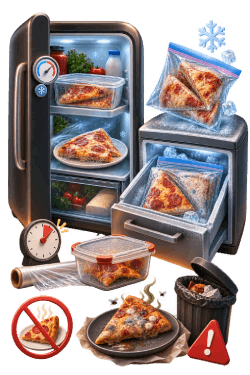
Four days is the standard window recommended by the USDA for cooked pizza stored in a refrigerator set at or below 40°F. Day one and two, you're in great shape. By day three, the crust starts turning a bit cardboard-like and toppings lose their appeal. Day four is still safe, but you're pushing the quality limit. Beyond that, toss it.
There's an important distinction between food safety and food quality. Safe means no harmful bacteria have had a chance to multiply to dangerous levels. Quality means the pizza actually tastes good. A slice can be technically safe on day four but still disappointing. Thick-crust pizzas and those with heavier toppings like sausage or roasted vegetables tend to hold up better than thin, minimalist slices, which dry out faster.
One factor people underestimate is how long the pizza sat out before going into the fridge. Cooked food left at room temperature for more than two hours enters the danger zone, where bacteria multiply rapidly. If your pizza sat on the counter through a whole movie and then some, refrigerating it afterward doesn't reverse that. At that point, it's safer to let it go.
Freezer Storage Time
Frozen pizza keeps indefinitely from a food safety standpoint, but the real deadline is flavor and texture. One to two months is the practical window. After that, freezer burn sets in, the crust turns dry and crumbly, and cheese loses its stretch. Wrap individual slices tightly in plastic wrap, then place them in a zip-lock bag with as much air removed as possible.
When to Throw It Out
Signs a slice should go straight in the bin: visible mold, a sour or off smell, or a slimy texture on the cheese or toppings. These aren't judgment calls. Any one of those is reason enough to skip the sniff test and just discard it.
Store Leftover Pizza So It Still Tastes Good Later
How you store pizza matters just as much as how you reheat it. Get the storage wrong and no reheating method in the world will save a dried-out, odor-soaked slice.
Best Practices for Refrigerating Pizza
Let slices cool for no more than 30 minutes before refrigerating. Leaving pizza at room temperature past two hours puts you in food-safety territory you don't want to be in. Once cooled, separate slices rather than stacking them bare – cheese and toppings will fuse together and tear when you pull them apart.
Place each slice in an airtight container, or wrap individual slices in plastic wrap followed by a layer of aluminum foil. The double wrap keeps moisture in and fridge odors out. A single layer of plastic wrap alone isn't enough – your pizza will absorb whatever else is in the fridge, and day-old garlic shrimp is not a flavor you want in your crust.
Storing a whole pie? Keep it in the box only if you're eating it within a few hours. For overnight storage, transfer slices to a zip-lock bag or airtight container. Properly stored pizza keeps in the fridge for three to four days.
Best Practices for Freezing Pizza
Freezing works well for longer storage, up to two months without serious quality loss. The trick is freezing slices individually before bundling them together. Lay slices flat on a baking sheet, freeze for one to two hours until solid, then transfer to freezer bags. This prevents them from sticking and lets you pull out exactly one slice without defrosting the whole batch.
Label bags with the date. It sounds obvious, but a mystery slice from three months ago is a gamble nobody needs to take.
Common Storage Mistakes
Sealing hot pizza in a container traps steam, which turns the crust soggy before it even hits the fridge. Stacking slices without parchment paper between them damages toppings and makes separation messy. Relying on flimsy plastic wrap alone lets air creep in, drying out the edges within a day. These are small habits that make a real difference.
The Best Ways to Reheat Pizza Without Ruining the Texture
Not every reheating method is equal, and the wrong one can turn a decent slice into a soggy, rubbery disappointment. Here's the short answer: the skillet is best overall for one or two slices, the oven handles bigger batches with ease, the air fryer is fast and surprisingly effective, the toaster oven is a solid middle ground, and the microwave is the last resort when time is genuinely tight.
Oven Reheating: Best for Multiple Slices and Thick Crusts
Dry, even heat is what makes the oven reliable. It revives the crust without steaming it into softness and melts cheese evenly across every slice. The main drawback is time – you're looking at 10 to 15 minutes total, which feels long when you're hungry.
Preheat your oven to 375°F. Place slices directly on the rack or on a baking sheet lined with foil. Bake for 8 to 10 minutes, checking at the 8-minute mark. For frozen slices, add 4 to 5 minutes without thawing first.
Skillet Reheating: Best for the Crispest Bottom
A cast-iron or nonstick skillet gives you something the oven struggles to match – direct contact heat that crisps the base while the cheese melts above it. Put the slice in a cold skillet, set the heat to medium, and cover with a lid or foil for the last 2 minutes. Total time is about 6 minutes. The steam trapped under the lid softens the cheese without drying it out.
Air Fryer Reheating: Best for Speed and Texture
At 375°F for 3 to 4 minutes, the air fryer circulates hot air around the slice and produces a genuinely crisp crust. There's no denying it's the fastest method that still delivers real texture. Avoid stacking slices – airflow needs space to work.
Toaster Oven Reheating: Best for Small-Batch Convenience
Set it to 350°F and place one or two slices on the wire rack. Eight minutes gets you a warm, reasonably crisp result without heating up a full oven. Great for a quick solo lunch.
Microwave Reheating: When Speed Beats Everything Else
Sixty seconds on high and you've got hot pizza with a soft, slightly chewy crust. Place a cup of water in the microwave alongside the slice – the moisture reduces rubbery texture. Acceptable, not great.
Choose the Right Method for Your Pizza and Your Time
Not every reheating situation is the same, and picking the wrong method is usually why pizza comes out soggy or dried out. The good news is that matching your method to your slice type and schedule is simpler than it sounds.
One Slice in a Hurry
The skillet is your best friend here. Heat a dry pan over medium, drop the slice in, cover it loosely with a lid for about two minutes, then uncover for another minute to crisp the bottom. Done. The microwave is faster but leaves the crust chewy – use it only if you genuinely don't have two minutes to spare.
Several Slices for a Family
The oven handles volume better than anything else. Arrange slices on a baking sheet, set the temperature to around 375°F, and give them eight to ten minutes. Avoid stacking or crowding – slices touching each other trap steam and soften the crust.
Deep-Dish or Thick Crust
Thick pizza needs more time and gentler heat. Start it in a cold oven, then set it to 350°F. The gradual heat works through the dense dough without burning the edges before the center is warm. Check the center with your finger before pulling it out – it should feel hot, not just warm.
Thin-Crust Slices
Thin crust dries out fast, so watch the clock closely. A 375°F oven for five to six minutes is usually enough. The air fryer also works well here – three to four minutes at 350°F gives you a genuinely crisp result without the wait.
Straight-from-Frozen Leftovers
Skip thawing. Place frozen slices directly on an oven rack at 375°F for twelve to fifteen minutes. Thawing first makes the crust soggy before it even hits the heat.
Late-Night Reheating with Minimal Cleanup
A skillet with a lid handles this well – one pan, no mess. If the slice has been sitting in the fridge for four or five days and the cheese looks dry and cracked, no method fully rescues it. Some slices are past saving.
A few tips that improve results across the board: pull refrigerated slices out five minutes before reheating so the center warms evenly. Never crowd a pan or baking sheet. Always check the center before serving, not just the edges.
Prevent Moisture Problems Before Reheating Pizza
Moisture is one of the biggest reasons leftover pizza loses its original texture. Too much trapped moisture leaves the crust soft and soggy, while too little dries out the cheese and edges. A few small adjustments before and during storage can keep slices in much better condition and make reheating easier.
- Cool pizza briefly before packing it. Give slices enough time for excess steam to escape, but do not leave them at room temperature for more than two hours. Packing pizza while it is still steaming traps condensation inside the container and soaks the crust.
- Keep wet toppings under control. Tomatoes, mushrooms, pineapple, and heavily sauced pizzas release extra moisture during storage. If liquid collects on top of a refrigerated slice, gently blot it with a paper towel before reheating rather than letting that moisture soak into the dough.
- Separate stacked slices with parchment paper. This prevents cheese and sauce from transferring between slices while also making it easier to remove only the amount you want to reheat.
- Avoid adding extra water unless the method needs it. A covered skillet can use a few drops of water beside the pizza to create steam for the cheese, but water should never be poured directly onto the slice.
- Reheat uncovered when crispness matters. Covering pizza for the entire reheating process traps steam. If using a skillet, cover only long enough to melt the cheese, then uncover briefly so the base can finish crisping.
Managing moisture does not require extra equipment or complicated preparation. It simply prevents storage conditions from working against your reheating method, helping the crust stay firmer while the cheese remains soft instead of dry or rubbery.
Good Storage Makes Great Reheated Pizza
Leftover pizza doesn't have to be a disappointment – it just needs a little attention from the start. Get it into an airtight container or wrapped tightly within two hours of eating, and you're already ahead. Keep it in the fridge for up to four days or freeze it for up to two months, and you've got genuinely good food waiting for you. When it's time to reheat, reach for the skillet if you have a few slices and want that crisp base back fast, or use the oven when you're feeding a crowd and need even heat across a whole batch. The air fryer is the smart pick when speed matters and you still want real texture. The microwave gets the job done in a pinch, but it's the fallback – not the goal.