What Really Defines a Pizza Style
Every pizza starts with flour, water, yeast, and salt – yet the results can look nothing alike. A New York slice flops at the fold, a Chicago deep-dish holds its shape like a savory pie, and a Roman al taglio crackles when you bite through it. Those differences don't come from secret ingredients. They come from a handful of technical decisions made before the pizza ever reaches an oven.
Dough Thickness and Hydration
The ratio of water to flour – called hydration – changes everything about how a dough feels and bakes. Higher hydration doughs, typically above 65%, produce an open, airy crumb with irregular bubbles. Lower hydration doughs are denser and more workable, which is why they suit thick, pan-pressed styles. Thickness itself is a separate choice: some doughs are stretched thin to near transparency, others are pressed into deep pans and left to rise for hours before any topping touches them.
Proofing and Rising Time
How long a dough rests matters as much as what's in it. A cold ferment over 24 to 72 hours develops complex flavor and a chewier texture. Fast-risen doughs baked the same day tend to taste blander and have a softer, more uniform crumb. Stuffed crust and rising crust styles often rely on shorter proofing times and commercial yeast to achieve that consistent, pillowy lift.
Pan Versus Hearth Baking
Baking directly on a stone or hearth at 800°F or higher gives the crust a charred, blistered bottom and a fast cook time – sometimes under 90 seconds. Pan baking is slower and more forgiving, allowing the dough to steam slightly from below, which creates that soft, almost focaccia-like base common in deep-dish and thick-crust styles.
The Balance of Crust, Sauce, Cheese, and Toppings
Layering order shapes the eating experience more than most people expect. Traditional Neapolitan pizza puts sauce beneath cheese. Detroit-style reverses that logic, spreading cheese to the very edges so it caramelizes against the pan. Deep-dish builds almost like a casserole, with cheese going down first and crushed tomatoes on top. Getting that ratio right – enough crust to support the load, enough sauce to cut through the fat – is what separates a great pizza from a soggy one.
Thin-Crust Styles Deliver Crispness, Char, and Foldable Slices
Lighter, faster to bake, and easier to eat standing up – thin-crust pizza covers a surprisingly wide range of textures and traditions. The dough is leaner, the bake is quicker, and the result can be chewy, crackly, blistered, or rigid depending on where the style comes from. Three expressions stand out as the most recognizable.
New York-Style Pizza
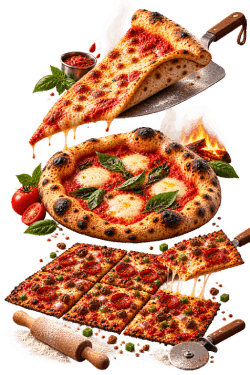
Hand-tossed into wide, thin rounds, New York slices are built for folding. The dough uses high-gluten bread flour, which gives the crust enough chew to hold up under a modest layer of crushed tomato sauce and low-moisture mozzarella. Slices are typically baked in gas deck ovens at around 500°F – hot enough to set the bottom quickly while leaving the edge slightly puffy. The result is a crust that is crisp underneath but still pliable. A 18-inch pie cut into eight slices is the standard, and the fold is almost a requirement in New York.
Neapolitan Pizza
Originating in Naples and governed by strict guidelines from the Associazione Verace Pizza Napoletana, this style uses "00" flour, fresh yeast, and a dough that ferments slowly – sometimes for 24 hours or more. The pizza is stretched by hand into a small, roughly 12-inch round and baked in a wood-fired oven at temperatures reaching 900°F. The whole bake takes about 60 to 90 seconds. That extreme heat produces a soft, slightly wet center and a puffy, charred outer crust called the cornicione. Toppings stay minimal – San Marzano tomatoes, fresh mozzarella, basil.
Tavern-Style Pizza
Popular across the Midwest, particularly in Chicago's bar scene, tavern-style pizza is rolled rather than tossed, producing a uniformly thin, cracker-like base. There is no puff at the edge. The dough is docked before baking to prevent any rise, and the pizza is cut into squares rather than wedges. Toppings tend to be heavier relative to the crust, which stays rigid enough to support them without bending.
Deeper Styles Turn Pizza Into a Richer, Heavier Experience
Some pizzas are built for speed and simplicity. Others are built for commitment. The styles covered here – deep dish, stuffed crust, and rising crust – all lean toward the heavier, more filling end of the spectrum, each arriving at that result through a different approach to dough, structure, and baking.
Deep Dish: Chicago's Most Polarizing Export
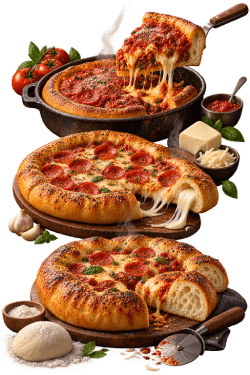
Baked in a deep, greased pan – often cast iron or a heavy steel pan with two-inch sides – deep dish is less like a flatbread and more like a savory pie. The dough is pressed up the sides of the pan, creating a tall, buttery shell that holds a substantial amount of filling. Cheese goes in first, directly on the dough, followed by toppings, and then a thick layer of chunky tomato sauce on top. That reversed layering prevents the cheese from burning during the longer bake time, which typically runs between 30 and 45 minutes at around 425°F. The result is dense, filling, and rich – one or two slices is genuinely enough for most people.
Stuffed Crust: Cheese Hidden in Plain Sight
Popularized by Pizza Hut in 1995, stuffed crust wraps mozzarella – sometimes string cheese, sometimes a blend – inside the outer edge of the dough before baking. The center of the pizza can stay relatively thin, which means the overall structure doesn't change as dramatically as deep dish does. What changes is the experience of eating the crust. That last bite, usually the part people leave on the plate, suddenly becomes the best part. The cheese melts into the dough as it bakes, creating a soft, gooey edge that adds richness without making the whole pizza heavier.
Rising Crust: Bread-Like and Built for Softness
Where deep dish relies on a pan and stuffed crust relies on a filling, rising crust relies entirely on the dough itself. A higher yeast content and an extended proofing period allow the dough to expand significantly before and during baking, producing a thick, airy crust with a soft, bread-like interior. There's no crunch here. The texture sits somewhere between focaccia and a dinner roll – chewy, pillowy, and mild. Brands like DiGiorno built their entire identity around this style, and there's no denying it appeals to people who want something closer to a hearty bread-based meal than a traditional pizza.
How Baking Method Changes Texture, Flavor, and Topping Balance
The oven is where a pizza either delivers on its promise or falls short. Same dough, same sauce, same cheese – but bake it in a wood-fired hearth versus a home oven pan, and you get two entirely different eating experiences. The method shapes everything: how the crust browns, whether the cheese bubbles or pools, and how much moisture escapes before the slice reaches your plate.
Stone and Deck Baking
Placing dough directly on a hot stone or deck surface pulls moisture out fast from the bottom while the top cooks through. The result is a crust that's crisp underneath, slightly chewy in the middle, and light enough to fold. New York-style pizza depends on this. The stone retains heat steadily, so each pizza gets a consistent, even bake without steaming – which is what keeps the base from going soft.
Wood-Fired and Coal Oven Baking
Temperatures in a wood-fired oven can reach 900°F or higher, and a Neapolitan pizza is typically done in 60 to 90 seconds. That speed creates char – those small dark spots on the crust edge that add a slightly smoky, bitter contrast to the sweet tomato and fresh mozzarella. Coal ovens work similarly, running extremely hot and producing a blistered, crackly crust that's hard to replicate at home. The toppings barely cook in the traditional sense; they're essentially flash-heated, which keeps them bright and distinct rather than melted together.
Pan Baking
Chicago deep-dish and Sicilian-style pizzas bake in oiled metal pans, and that changes the whole dynamic. The oil fries the outer crust as it bakes, creating a rich, almost buttery edge. Heat reaches the dough more slowly and evenly, which gives thicker crusts time to cook through without burning. Toppings sit heavier, cheese browns on top, and the overall result feels denser and more filling – a slice that eats like a meal.
Home Oven and Rising Crust Baking
Most home ovens cap out around 500°F, which means longer bake times and a softer result. Rising crust pizzas – the kind sold frozen and finished at home – are designed for exactly this environment. The dough is enriched and proofed to stay tender even with extended baking. There's no char, no crunch from a stone. What you get instead is a pillowy, bread-like base where the sauce and cheese sink in slightly, making each bite more uniform. Some people love that. It's comfort food logic applied to pizza.
How to Choose a Pizza Style Based on Texture and Occasion
Knowing how each pizza style is built makes choosing one much easier. Instead of starting with toppings, think about the texture you actually want and how filling the meal needs to be. A thin, crisp pizza works very differently from a thick pan pie, especially when serving a group or planning a casual meal at home.
- Choose New York-style for flexibility and balance. Its thin but chewy crust works well when you want a slice that can support plenty of flavor without feeling overly heavy. It is also practical for sharing because the large wedges are easy to fold and eat by hand.
- Pick Neapolitan for softness and char. The tender center and blistered outer crust make this style ideal when you prefer minimal toppings and want the dough, tomato, and cheese to remain distinct rather than blending into one heavy bite.
- Go with tavern-style for maximum crispness. Its cracker-like base stays firm from edge to edge, making it a strong choice for people who dislike soft or floppy crusts. Square-cut pieces also work especially well for groups.
- Choose deep dish when pizza needs to feel like a full meal. The thick crust, generous cheese, sauce, and substantial toppings make it much richer than most thin-crust styles. Smaller portions are usually enough.
- Try stuffed or rising crust for softer textures. Stuffed crust adds richness around the edge, while rising crust creates a thick, bread-like base that suits diners who prefer softness over crunch.
There is no universally superior pizza style because each one solves a different craving. Crispness, chew, softness, char, and richness all come from deliberate choices in dough preparation and baking. Matching those qualities to the occasion makes it easier to choose a pizza that actually delivers the texture you were hoping for.
The Best Pizza Style Depends on What You Crave
Choosing between a cracker-thin Roman slice and a towering Chicago deep dish isn't really about preference for toppings – it comes down to dough structure, baking method, and the texture that lands on your palate. Thin crust delivers crispness and char with minimal chew; deep dish builds layers of filling inside a buttery, thick shell baked low and slow; stuffed crust hides a ribbon of melted cheese inside the rim for a richer bite all the way to the edge; rising crust offers a soft, pillowy interior that sits somewhere between a bread roll and a traditional pizza base. Each style is a genuinely different eating experience. Once you know what separates them, picking the right one for a Friday night or a home bake becomes a lot more satisfying than just guessing.