Where Pizza Delivery Problems Start Before the Driver Leaves
Most delivery complaints get blamed on drivers. Wrong address, late arrival, cold pizza. But trace the problem back and you'll often find the real mistake happened twenty minutes earlier at the cut-and-box station. By the time the order hits the road, the damage is already done.
Wrong Boxes and Poor Box Storage
Using whatever box is closest seems harmless until you're sending a 14-inch pizza in a box with too much headroom, and the lid is pressing down on the cheese by the time it arrives. Box sizing matters. A loose-fitting box lets the pizza shift, traps steam unevenly, and gives the crust nowhere stable to sit.
Store boxes flat in a dry area away from the oven. Warped or moisture-softened boxes collapse under weight during stacking. Keep at least two size options on hand and match the box to the pizza, not to whatever's in reach.
Boxing Pizzas Too Hot
Sliding a pizza straight from the oven into a closed box traps steam with nowhere to go. The result is a soggy center, condensation pooling under the crust, and cheese that's moved halfway to one side by the time it's opened. Let pizzas rest on a vented rack for 60 to 90 seconds before boxing. That's enough time to release the worst of the steam without dropping the temperature too far.
Weak Topping Distribution and Overloaded Pies
Toppings sliding to one side is almost always a prep problem, not a driving problem. Uneven distribution during assembly gets worse in transit, especially on pies with high-moisture toppings like fresh tomatoes or mushrooms. Limit combinations that stack wet ingredients, and retrain anyone on the make line to spread toppings edge-to-edge with consistent coverage.
Rushed Slicing and No Final Check
A folded crust usually means the pizza was cut too fast or with a dull wheel. Rushed slicing drags toppings and compresses the edge. Replace pizza wheels on a set schedule and slow the cut station during peak hours if quality is slipping.
Add a 10-second visual check at the dispatch line before every box is closed. Check the cut, the topping coverage, and the box condition. Ten seconds per order catches most of what customers would otherwise photograph and post online.
How to Fix the Most Common In-Transit Damage
Getting the pizza out of the oven correctly means nothing if it falls apart between your shop and the front door. Transit damage is where a lot of good kitchens quietly lose customers – and most of it is preventable with the right habits.
Cold Slices
A pizza that cools too fast usually points to one thing: the bag. Thin or worn insulated bags lose heat within minutes, especially in winter or on longer routes. The fix is straightforward – invest in commercial-grade, double-insulated bags and replace them the moment they start losing their shape. Staging also matters. A pizza sitting on the counter for four minutes before a driver picks it up has already started losing temperature.
Toppings Sliding to One Side
Sharp turns and sudden braking are the usual culprits. When drivers take corners fast or brake hard, toppings shift – and there's no fixing that at delivery. Train drivers to treat every pizza run like they're carrying an open cup of coffee. Flat, stable surfaces in the vehicle help too. A bag wedged between the seat and the console at an angle is a topping disaster waiting to happen.
Crushed Boxes
Stacking two or three boxes under a heavy bag or on top of each other causes this more than anything else. Single-layer transport for 16-inch or larger pies should be a firm rule, not a suggestion. Smaller orders can stack, but only if the bag has a rigid base. Crushed boxes also mean crushed crusts and uneven cheese – customers notice both.
Folded Crusts
This happens when boxes aren't fully supported during loading or when drivers tilt the bag to fit it into a small car. A folded crust usually means the box shifted mid-route. Require drivers to load bags flat and check positioning before pulling out of the lot.
Excess Moisture
Steam trapped inside the box turns the crust soggy fast. Vented boxes help, but leaving the bag slightly unzipped for the first two minutes after loading can release enough steam to make a real difference without dropping the temperature significantly.
Late Deliveries and the Communication Gaps That Make Them Worse
A bad delivery experience isn't just about cold cheese. Delays hit temperature, texture, and customer trust all at once – and unlike a wrong topping, a 45-minute wait is hard to forgive.
Unrealistic Delivery Radius
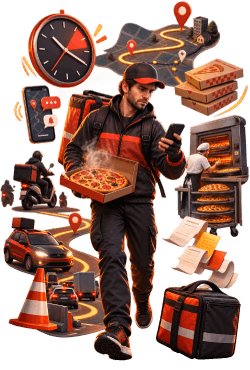
Stretching your zone to pull in more orders sounds smart until your drivers are spending 25 minutes on a single run. By the time the box arrives, the crust has steamed itself soft inside the packaging. Tighten your radius to what your team can realistically cover in under 20 minutes during peak hours. If you're losing orders at the edges, that's a sign the zone was already too wide.
Poor Dispatch Timing
Dispatch without a clear owner becomes guesswork. Someone has to decide when an order goes out – not based on when it's ready, but on when the driver can actually deliver it hot. Assign one person to dispatch during busy periods. Their only job is matching ready orders to available drivers without stacking runs that add 15 minutes to each trip.
Kitchen Bottlenecks
Prep time and drive time are two separate clocks, and most shops run them as one. If your oven is backed up, that delay transfers directly to the customer's door. Stagger oven loads so you're not pulling six pies at once with no driver ready. A pizza sitting under a heat lamp for eight minutes before dispatch has already lost the battle.
Understaffed Peak Periods
Friday at 7 p.m. with two drivers on shift is a refund waiting to happen. Track your busiest windows and staff to match them. One extra driver during a three-hour peak can cut average delivery time by 10 minutes across the board.
Order Batching Mistakes
Batching two or three orders into one run saves fuel but kills timing. The second and third stops are almost always late. Keep batching to routes that genuinely overlap within a half-mile, and never batch when either order is already running behind.
Weak Customer Communication
Customers don't usually complain about delays – they complain about silence. Send a proactive update the moment you know an order is running more than five minutes late. A simple text saying "your order is on its way, running about 15 minutes" stops most angry calls before they happen. Set honest ETA windows from the start rather than promising 30 minutes when your kitchen is already behind.
What Can Realistically Be Salvaged at Home and What Cannot
Not every bad delivery is a write-off. Some issues are genuinely recoverable with two minutes and a kitchen. Others are done the moment the box opens. Knowing the difference helps you respond faster, spend less on unnecessary refunds, and sound credible when you talk to a frustrated customer.
What Customers Can Fix at Home
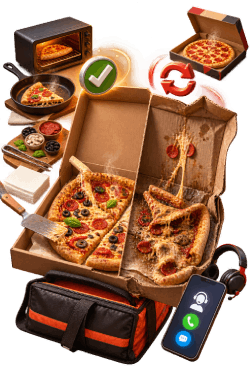
A cold slice is the most common complaint, and it's one of the easiest to recover. Reheating in a skillet on medium heat for three to four minutes brings back a crisp base and melted cheese without the sogginess of a microwave. A slightly soft crust that arrived warm but lost its snap is in the same category – a quick oven run at 375°F for five minutes usually does it.
Excess moisture pooling under toppings is fixable too. Blotting with a paper towel before reheating removes most of it. Customers rarely think to try this, so it's worth telling them directly if they call in.
Light topping shift – a few mushrooms or olives that slid to one side – is cosmetic. The pizza is still edible. Suggesting a quick redistribution before reheating takes two seconds and usually satisfies the complaint.
What Usually Cannot Be Salvaged
A heavily crushed box means the structure of the pie is compromised. Toppings are mixed into cheese, the crust may be snapped, and reheating makes it worse. That's a replacement, not a home fix.
Major topping loss – a quarter of the cheese stuck to the box lid, toppings missing entirely from one side – is not recoverable. Same goes for a pie that arrived folded from a bad bag fit or a driver who stacked orders. A heavily folded crust cracks or goes gummy when reheated.
Pies that sat in a bag for 45 minutes or more often arrive soggy all the way through. Reheating drives out some moisture but rarely restores texture.
Training Staff to Handle These Calls Consistently
The goal is a fast, confident response that doesn't involve arguing about whether the pizza is "really" bad. Train staff to ask one question: is the pizza structurally intact? If yes, walk the customer through a home fix and offer a discount on the next order as goodwill. If no, issue a replacement or credit immediately, no debate.
Staff should never suggest a home fix for a crushed or folded pie. Customers who try and fail are angrier the second time. Set a clear internal rule – if the box is visibly damaged on arrival, it's a replacement, full stop.
Track Delivery Problems Before They Become Patterns
Fixing one complaint is useful, but tracking repeated failures is what prevents the same problem from reaching another customer. A simple delivery log can show whether cold food, late arrivals, damaged boxes, or missing items are connected to certain shifts, routes, drivers, or kitchen bottlenecks. You do not need complicated software to spot useful patterns.
Track a few consistent details for every complaint:
- Order time and delivery time: Compare the promised ETA with the actual arrival to see when delays are happening most often.
- Type of complaint: Separate cold food, missing items, damaged boxes, topping movement, and incorrect orders instead of grouping everything together.
- Driver and route: Repeated problems on one route may indicate unrealistic delivery zones, traffic issues, or poor batching decisions.
- Kitchen preparation time: Record when the pizza entered and left the oven so you can identify whether delays started before dispatch.
- Resolution provided: Note whether the customer received a replacement, refund, credit, or another solution.
- Repeat complaints: Flag customers who experience the same problem more than once. A second failure deserves closer attention.
Review the log weekly rather than waiting for negative reviews to reveal a pattern. Even ten or fifteen recorded complaints can show where the delivery system is breaking down. Once the cause is visible, managers can make targeted changes instead of relying on guesswork.
Small Delivery Fixes Protect Every Order
Most repeat-customer problems are predictable: cold food, crushed boxes, and late deliveries usually come from the same weak points. Fix one issue at a time. If cold pizza is the main complaint, check insulation, dispatch timing, and how long orders wait before pickup. Simple in-store checks can catch topping, moisture, and packaging problems before delivery. Driver habits also matter, including bag handling, car temperature, and route speed. Give realistic delivery estimates rather than optimistic promises. Finally, set clear rules for refunds, replacements, and complaint logging. Strong systems help staff respond quickly, protect customer trust, and reduce repeat mistakes over time.