Why an Air Fryer Is the Best Way to Reheat Most Pizza
Cold pizza has its fans, sure, but reheated pizza that actually tastes good? That takes the right method. The air fryer earns its place here not through hype but through simple physics. Hot air circulates rapidly around the slice, hitting the bottom crust with consistent dry heat while warming the toppings from every angle at once.
What the Air Fryer Actually Does to Your Slice
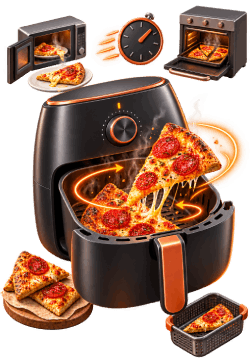
That circulating heat is what separates the air fryer from its competition. A microwave blasts pizza with moisture-generating energy, which is exactly why the crust turns rubbery and the cheese gets that unpleasant slick texture. Thirty seconds in a microwave and you've essentially steamed your slice into submission. The oven avoids that problem, but preheating to 375°F takes 10 to 15 minutes before a single slice even goes in. For one or two pieces, that's genuinely wasteful.
Reheating in an air fryer takes about 3 to 4 minutes at 350°F for a standard thin-crust slice. The bottom crisps up almost the way it did fresh, the cheese melts back to something close to its original pull, and the toppings heat through without drying out completely.
Where It Falls Short
There are real limits worth knowing. Most air fryer baskets fit two or three slices at most, so feeding a group means working in batches. Thick-crust slices or deep-dish need a lower temperature and a little more time, otherwise the cheese scorches before the center warms through. Watching the cheese closely after the two-minute mark is genuinely good practice, especially with toppings that char easily, like pepperoni or thin-sliced vegetables.
Compared to the oven, the air fryer wins on speed and crust texture for single servings. Compared to the microwave, it wins on almost everything except convenience. If you're reheating more than half a pizza at once, the oven still makes sense. For everyday leftover slices, the air fryer is simply the smarter call.
Set the Right Temperature and Time for Leftover Slices
Getting the temperature wrong is the fastest way to ruin a perfectly good slice. Most leftover pizza reheats well at 375°F (190°C) – that's the sweet spot for crisping the crust without scorching the cheese or drying out the toppings before the center warms through.
Timing depends on three things: crust thickness, topping load, and starting temperature. A cold slice pulled straight from the fridge behaves differently than one that's been sitting on the counter for 20 minutes. Fridge-cold pizza needs an extra minute or two. Room temperature slices heat faster and more evenly.
Here's a practical breakdown by crust type:
Thin crust: 3 to 4 minutes at 375°F. These slices heat quickly, so check at the 3-minute mark. Overcooked thin crust turns brittle rather than crisp.
Hand-tossed or regular crust: 4 to 5 minutes at 375°F. This is the most forgiving range. The base crisps up nicely while the cheese gets that soft, melty texture without bubbling too aggressively.
Thick crust or deep dish: 6 to 8 minutes at 350°F. Drop the temperature slightly and give it more time. High heat on a thick slice often means a scorched exterior and a cold, doughy center – the opposite of what you want.
Heavily loaded slices – think extra cheese, multiple meat toppings, or chunky vegetables – benefit from 30 seconds of extra time at the same temperature. The mass of toppings insulates the crust and slows the whole process down.
One habit worth building: never skip preheating the air fryer. A cold basket adds uneven heat from the start. Give it 2 to 3 minutes at your target temperature before the pizza goes in. That brief warm-up makes a noticeable difference in how evenly the slice heats from bottom to top.
Follow a Simple Step-by-Step Method for Crisp, Even Results
Getting the process right takes less effort than most people expect. A few small decisions – where you place the slices, how hot you run the air fryer, when you check – make the difference between pizza that tastes fresh and pizza that tastes like a compromise.
Preheat First, Always
Start by preheating your air fryer to 325°F (163°C) for two to three minutes. Skipping this step means the crust sits in gradually warming air instead of hitting immediate dry heat, and you lose the crispness you're after. Think of it like a cold pan – the results are never quite right.
Arrange Slices for Airflow
Place slices in a single layer with at least half an inch of space between them. Crowding the basket blocks hot air from circulating underneath the crust, which is where the real crisping happens. If you have four slices and a small basket, reheat in two batches. It adds a few minutes but the texture is worth it.
Reheat, Then Check Early
Run the air fryer for three minutes, then open it and check. Press the center of a slice lightly – it should feel warm through, not cool or spongy. The crust edge should be firm and the cheese just starting to bubble. If it needs more time, add 60-second bursts rather than a long second run. This prevents the cheese from scorching before the center catches up.
Protecting Cheese and Delicate Toppings
Thin toppings like fresh basil, prosciutto, or spinach dry out fast at high heat. Pull those off before reheating and add them back after. For slices loaded with cheese, dropping the temperature to 300°F (149°C) and adding 30 extra seconds gives the heat time to reach the center without burning the top. A loose tent of foil over the cheese works too, though it slightly softens the top layer.
Adjust for Thick Crust, Deep-Dish Slices, and Common Problems
Thin crust reheats fast and forgives most mistakes. Thicker slices are less patient. A deep-dish or pan-style slice has a lot more dough in the middle, and if you run the air fryer too hot, the cheese on top scorches before the center ever gets warm. A few simple adjustments fix that entirely.
How to Reheat Thick-Crust and Deep-Dish Slices

Drop the temperature to 300°F instead of the usual 325–350°F range, and give the slice more time – around 6 to 8 minutes rather than 3 to 4. The gentler heat lets warmth work its way through the dough without punishing the cheese. If your slice is especially tall, like a Chicago-style deep-dish, loosely tent a small piece of foil over the top for the first four minutes, then remove it so the cheese can finish with a little direct heat.
Troubleshooting the Most Common Problems
Scorched cheese almost always comes from too-high heat or skipping the preheat, which causes uneven temperature spikes. Lower the temperature by 25°F and check the slice at the three-minute mark.
Still-cold centers usually mean the slice went in straight from the fridge. Let it sit at room temperature for five minutes first – even that short window makes a real difference for thicker crusts.
Crust that comes out too hard is typically overcooked. Shave 60 to 90 seconds off your time and check earlier than you think you need to.
Soggy bottoms happen when moisture has nowhere to go. Never line the basket with foil or parchment – the air fryer needs airflow beneath the slice to crisp it properly.
Toppings sliding off are mostly a cosmetic annoyance, but pressing them lightly before reheating helps them stay put.
When the Oven or Microwave Makes More Sense
Reheating four or more slices at once is where the oven earns its place. An air fryer basket simply can't fit a crowd without slices overlapping, which kills the crispness you're after. Set the oven to 375°F on a baking sheet and give it 10 minutes.
The microwave still wins on pure speed. If you need one slice warm in 90 seconds and don't care about the crust, it's the honest choice. No method is universally right – it depends on how much time you have and how much the texture matters to you.
Small Adjustments That Make Reheated Pizza Even Better
Once you have the basic temperature and timing right, a few small adjustments can improve the final texture even further. Leftover pizza changes while it sits in the refrigerator. The crust absorbs moisture from the sauce and toppings, cheese firms up, and ingredients such as mushrooms or tomatoes can release extra water. Managing that moisture is just as important as choosing the correct air fryer temperature.
- Reheat straight from the refrigerator for thin slices. Thin-crust pizza does not usually need to come to room temperature first. The air fryer can warm it quickly enough without burning the exterior. For very thick slices, five to ten minutes on the counter can help the center heat more evenly.
- Avoid stacking or overlapping slices. Even a small overlap blocks circulating air and creates soft patches. Leave space around each slice so hot air can reach the crust, edges, and toppings evenly.
- Check moisture-heavy toppings before reheating. Tomatoes, mushrooms, pineapple, and heavily sauced pizzas can make the base softer overnight. If you see obvious surface moisture, gently blot it with a paper towel before placing the slice in the basket.
- Start checking earlier with cheese-heavy pizza. Extra-cheese slices may look ready before the crust has finished crisping. Use a slightly lower temperature when necessary and add another minute rather than exposing the cheese to intense heat from the start.
- Let the slice rest briefly after reheating. Give it about 30 to 60 seconds before eating. The cheese settles slightly, the crust remains crisp, and extremely hot sauce or toppings become easier to handle.
- Clean the basket between messy batches. Melted cheese, loose toppings, and grease left behind can smoke during the next batch and affect the flavor of the pizza.
These adjustments are especially useful when reheating different styles of pizza in the same air fryer. Instead of relying on one fixed setting for every slice, pay attention to thickness, moisture, and topping quantity. Starting with a recommended time and checking early gives you much more control than simply setting a timer and walking away. The goal is not maximum heat. It is enough controlled heat to restore a crisp base, warm center, and properly melted cheese without turning yesterday's pizza into something dry or burnt.
Your Leftover Pizza Can Taste Great Again
Reheating pizza well comes down to choosing the right method for what you have in front of you. The air fryer earns its place here because it delivers dry, circulating heat that crisps the crust from underneath while warming the cheese just enough to turn melty without scorching. A thin slice needs about three minutes at 350°F. A thick, doughy slice might need closer to five or six at the same temperature, with a quick check at the halfway point to make sure the cheese isn't getting too dark. That habit of checking early – rather than trusting a timer blindly – is what separates a genuinely good reheated slice from a ruined one. When you're working with a large batch or a whole half-pie, the oven handles volume better. For a single sad slice at midnight, nothing beats the air fryer for speed and results. The microwave stays in last place for anything where crust texture matters.